Spaghetti Bolognese: A Gastronomic Feast of Italian Flavor
In the resplendent constellation of Western cuisine, Spaghetti Bolognese shines like a brilliant star, captivating the taste buds of countless diners with its rich flavor and diverse texture. This classic dish, carrying the profound heritage of Italian culinary culture, has every step infused with respect and love for ingredients and the art of cooking.
To prepare Spaghetti Bolognese, one must first meticulously prepare the necessary ingredients. Spaghetti, those slender and resilient noodles, are the foundation of this delicacy. They are like threads waiting to be woven, closely connecting various flavors. Ground beef, it is better to choose beef with a balanced fat and lean ratio. Its rich fat releases a rich meaty aroma during the stir-frying process, adding a mellow undertone to the meat sauce. Onions and garlic, this classic pair in Western cuisine, when minced and released, give off a unique and charming spicy aroma. They are the key elements to awakening the soul of the entire dish. Tomato paste, as the core seasoning of the meat sauce, brings a sweet and sour, rich tomato flavor and is an important contributor to giving the meat sauce its distinct characteristics. Olive oil, with its pure quality and unique fruity aroma, not only enables the ingredients to be heated evenly during the cooking process but also infuses a touch of the freshness of the Mediterranean into the dish. Salt and black pepper, simple yet indispensable seasonings, they are like notes in music, precisely regulating the balance and rhythm of the taste. Basil leaves, that touch of fresh green and unique herbal aroma, add an elegance and natural touch to the spaghetti. Cheese powder, like the final finishing touch, imparts a rich milky aroma and a smooth texture to the entire dish the moment it is sprinkled.
The culinary journey begins with the mincing of onions and garlic. Finely chop them, and with each cut, it seems as if their latent aroma energy is being released. Subsequently, heat the pan and add cold oil, which is a crucial technique for cooking the ground beef. When the olive oil spreads slowly in the pan, forming a thin film of oil, add the ground beef. As the temperature rises, the ground beef begins to change color gradually. The originally pinkish hue turns into an inviting brown color, and the fat slowly seeps out, sizzling in the pan and filling the air with a rich meaty aroma. During this process, the proteins in the beef undergo the Maillard reaction under high temperatures, generating complex and charming aroma compounds, laying a rich foundation for the meat sauce.
Next, add the minced onions and garlic. They meet the ground beef in the pan and are instantly sparked. The sweet aroma of the onions and the pungency of the garlic blend with each other, permeating the entire kitchen. Through continuous stir-frying, the onions gradually become transparent, and the pungency of the garlic becomes milder. The aromas of the three perfectly blend to form a unique and inviting complex aroma. At this point, add the tomato paste. The bright red color jumps in the pan like flames. The tomato paste quickly mixes with the ingredients in the pan. During the stir-frying process, the sweet and sour taste of the tomatoes gradually releases, interweaving and entangling with the aromas of the beef, onions, and garlic, forming a rich and mellow flavor core.
Then, add an appropriate amount of water. This step is of vital importance. The addition of water dilutes the sauce, allowing it to fully absorb the flavors of various ingredients during the slow cooking process and gradually thicken. During the slow simmering process over low heat, the sauce is like being enchanted, constantly boiling, blending, and the flavor molecules penetrate and react with each other under the effect of heat. The originally thin liquid gradually thickens, and the color becomes deeper and richer. Every drop of the sauce is filled with the mellow taste of the beef, the spicy aroma of the onions and garlic, and the sweet and sour taste of the tomatoes, as if condensing the entire Italian sunshine and passion within.
While the meat sauce is simmering, start another pot to cook the spaghetti. Add an appropriate amount of salt and olive oil to the pot. The salt can enhance the base flavor of the spaghetti, and the olive oil can prevent the noodles from sticking together. When the water boils, add the spaghetti. The spaghetti rolls and dances in the pot. As time passes, it gradually absorbs the water and becomes soft and resilient. The cooking time of the spaghetti needs to be precisely controlled. Depending on the type and thickness of the spaghetti, it generally takes about 8 - 12 minutes. Once cooked, drain the spaghetti and remove the excess water. At this point, the noodles are distinct and emit a light wheat aroma.
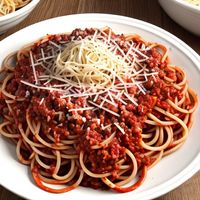
Finally, put the cooked spaghetti into the prepared meat sauce. Gently stir with chopsticks or a fork to ensure that each noodle is evenly coated with the rich meat sauce. The bright meat sauce envelopes the white noodles as if dressing them in a magnificent coat. Then, sprinkle black pepper. The spicy particles of black pepper add a lively and stimulating sensation to the dish, enriching the taste layers. Sprinkle basil leaves again. The fresh aroma of basil instantly spreads, like a summer breeze passing over the taste buds, bringing a refreshing and elegant touch to the rich spaghetti. Finally, sprinkle some cheese powder. The cheese powder melts the moment it comes into contact with the heat, forming a thin cheese film, adding a rich milky aroma and a smooth texture to the entire dish, like the perfect ending to this taste feast.
Spaghetti Bolognese is not just a dish; it is a cultural heritage and expression. Through simple yet exquisite ingredients and cooking steps, it presents the charm and passion of Italy to every taster. Whether on a warm family dining table or under the romantic candlelight in a restaurant, this Spaghetti Bolognese can, with its unique charm, offer people an unforgettable taste journey, allowing them to immerse in the endless charm of Italian culinary culture.
By Jessica Lee/Dec 21, 2024
.png)
By Emily Johnson/Dec 21, 2024

By John Smith/Dec 21, 2024
By David Anderson/Dec 21, 2024

By Eric Ward/Dec 21, 2024
By James Moore/Dec 21, 2024
By Jessica Lee/Dec 21, 2024

By Grace Cox/Dec 21, 2024

By Sophia Lewis/Dec 21, 2024

By Daniel Scott/Dec 21, 2024

By Lily Simpson/Dec 21, 2024

By Noah Bell/Dec 21, 2024
By Daniel Scott/Dec 21, 2024

By William Miller/Dec 21, 2024

By Amanda Phillips/Dec 21, 2024

By Christopher Harris/Dec 21, 2024

By Laura Wilson/Dec 20, 2024
By Rebecca Stewart/Dec 20, 2024

By Jessica Lee/Dec 20, 2024

By Olivia Reed/Dec 20, 2024